UI Critique & Redesign
Evaluating real interfaces and redesigning them for clarity, usability, and better user experience.
Solution
UX/UI Design
Spotting what’s not working - and redesigning it with purpose.
This project showcases my ability to evaluate real interface patterns, identify usability issues, and propose clear, user‑centered improvements supported by rationale and redesigns.
UI ELEMENT 1
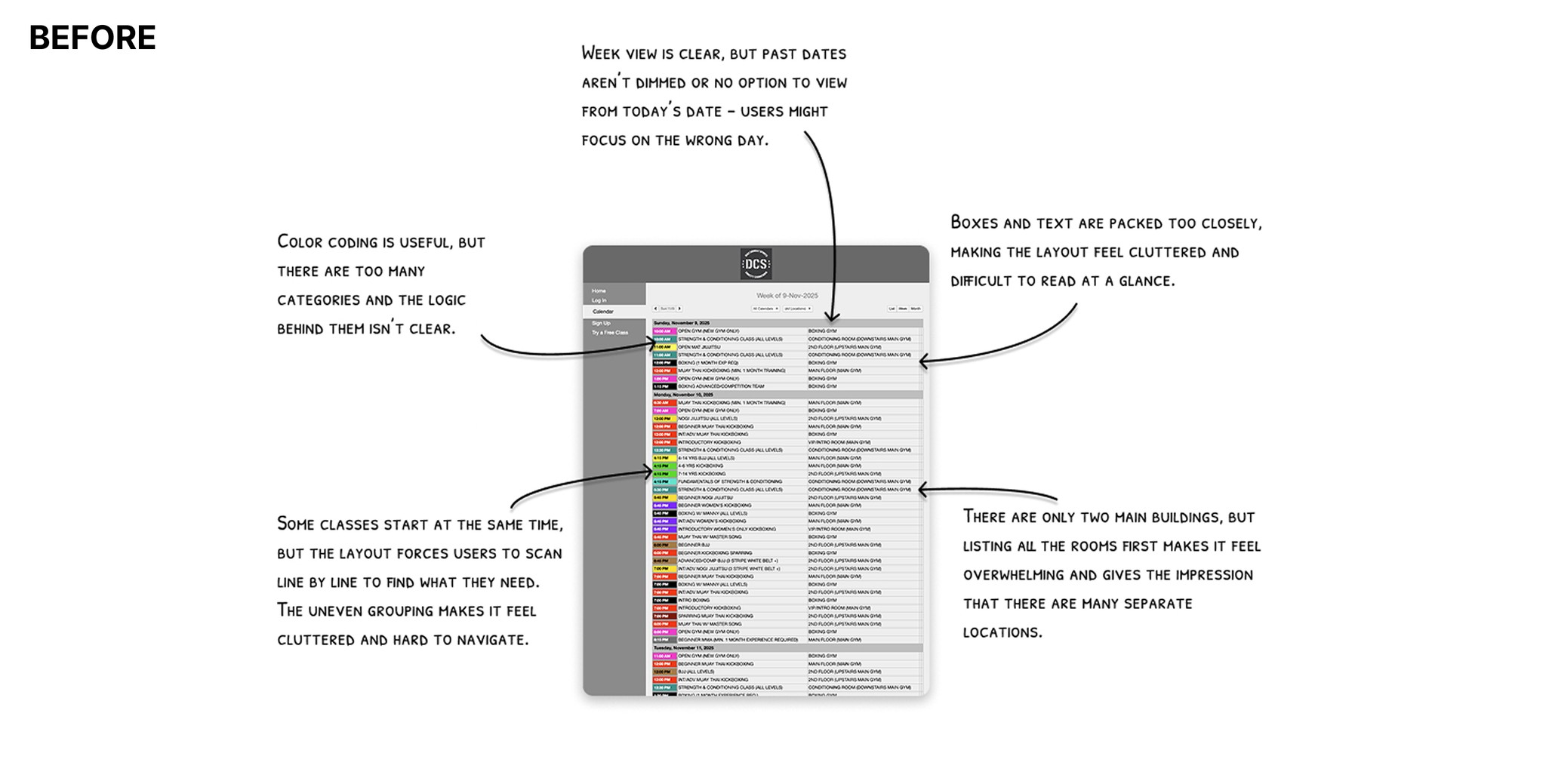
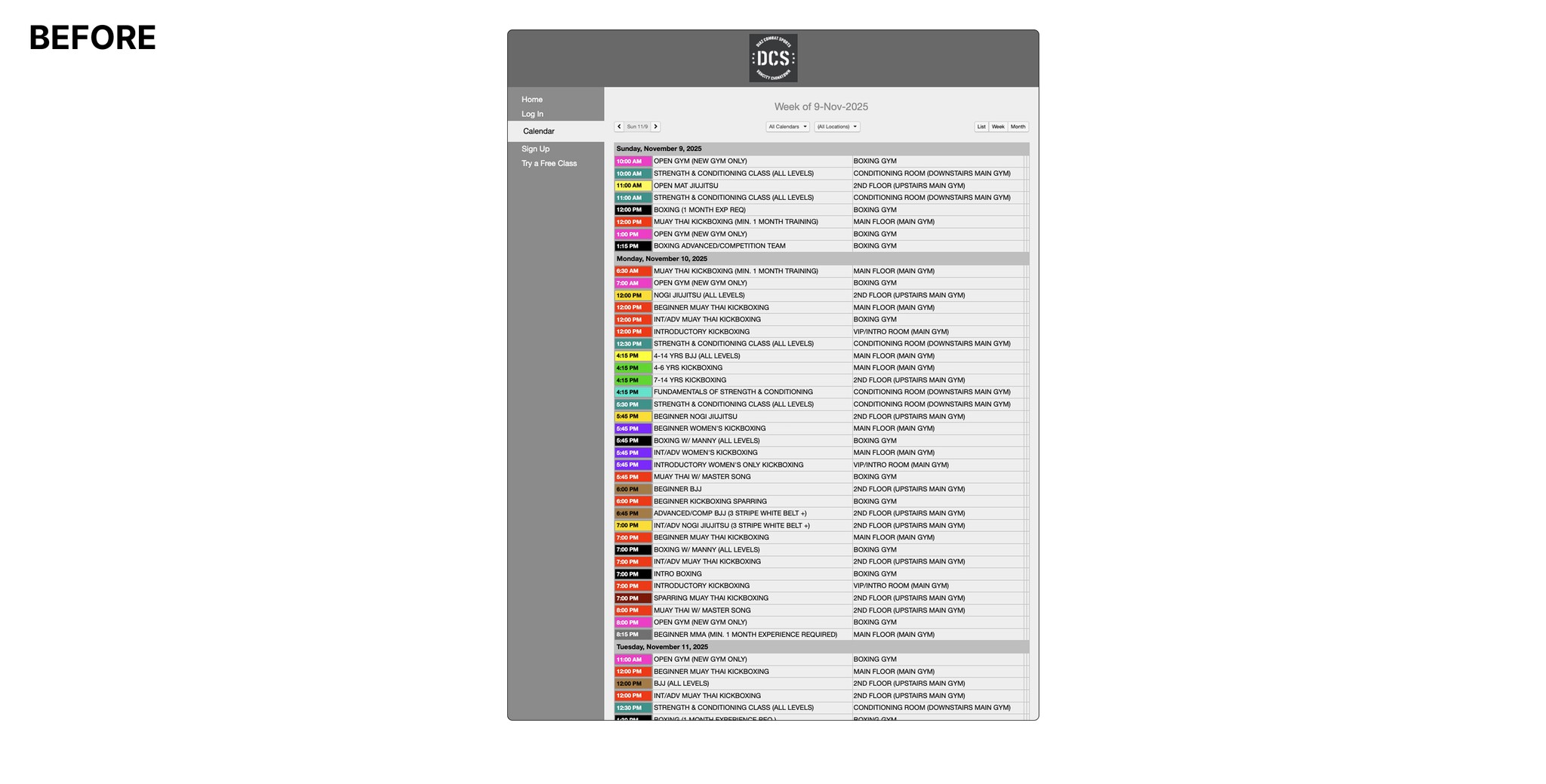
A clearer structure, cleaner visuals, and a more logical system.
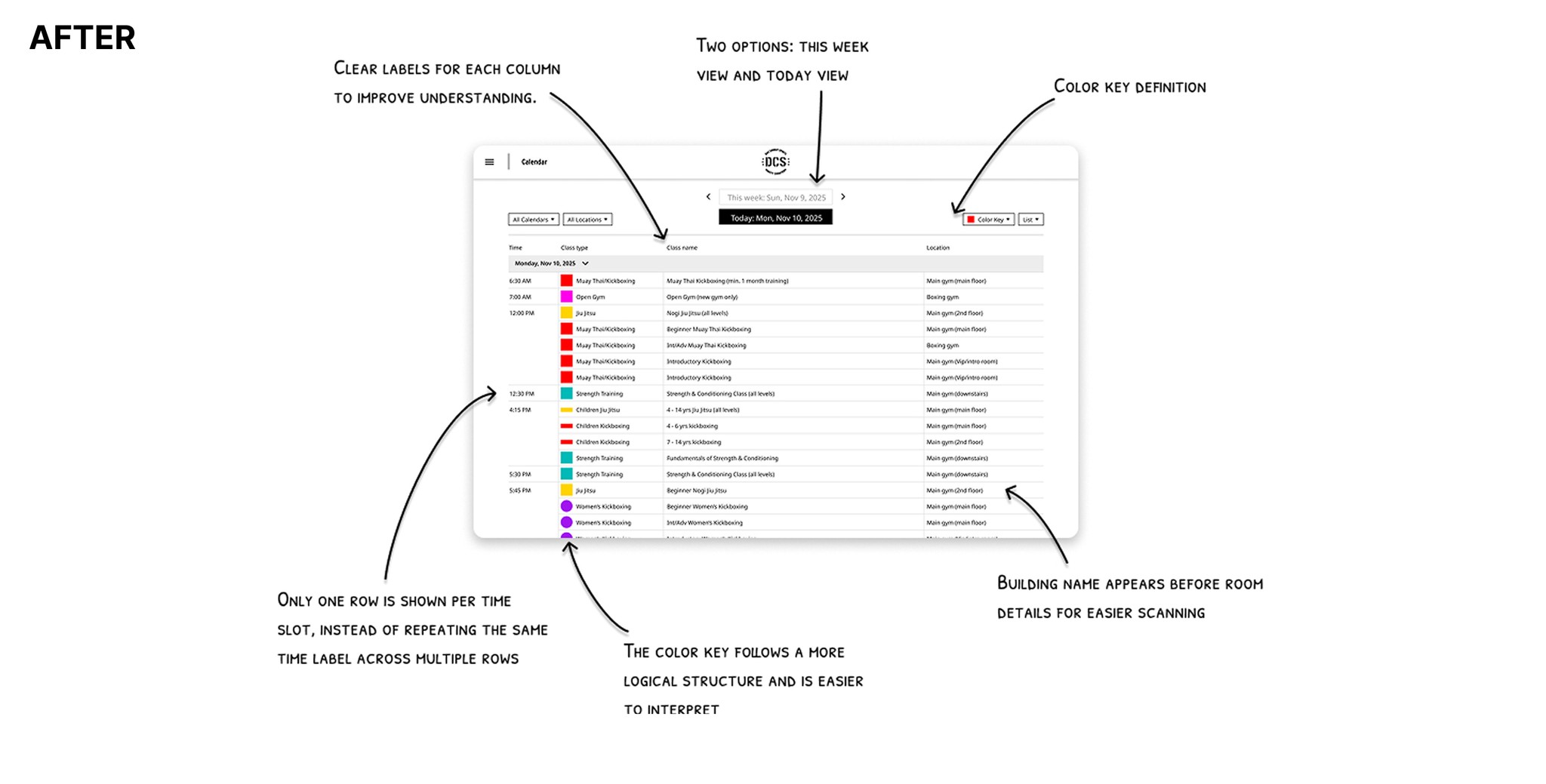
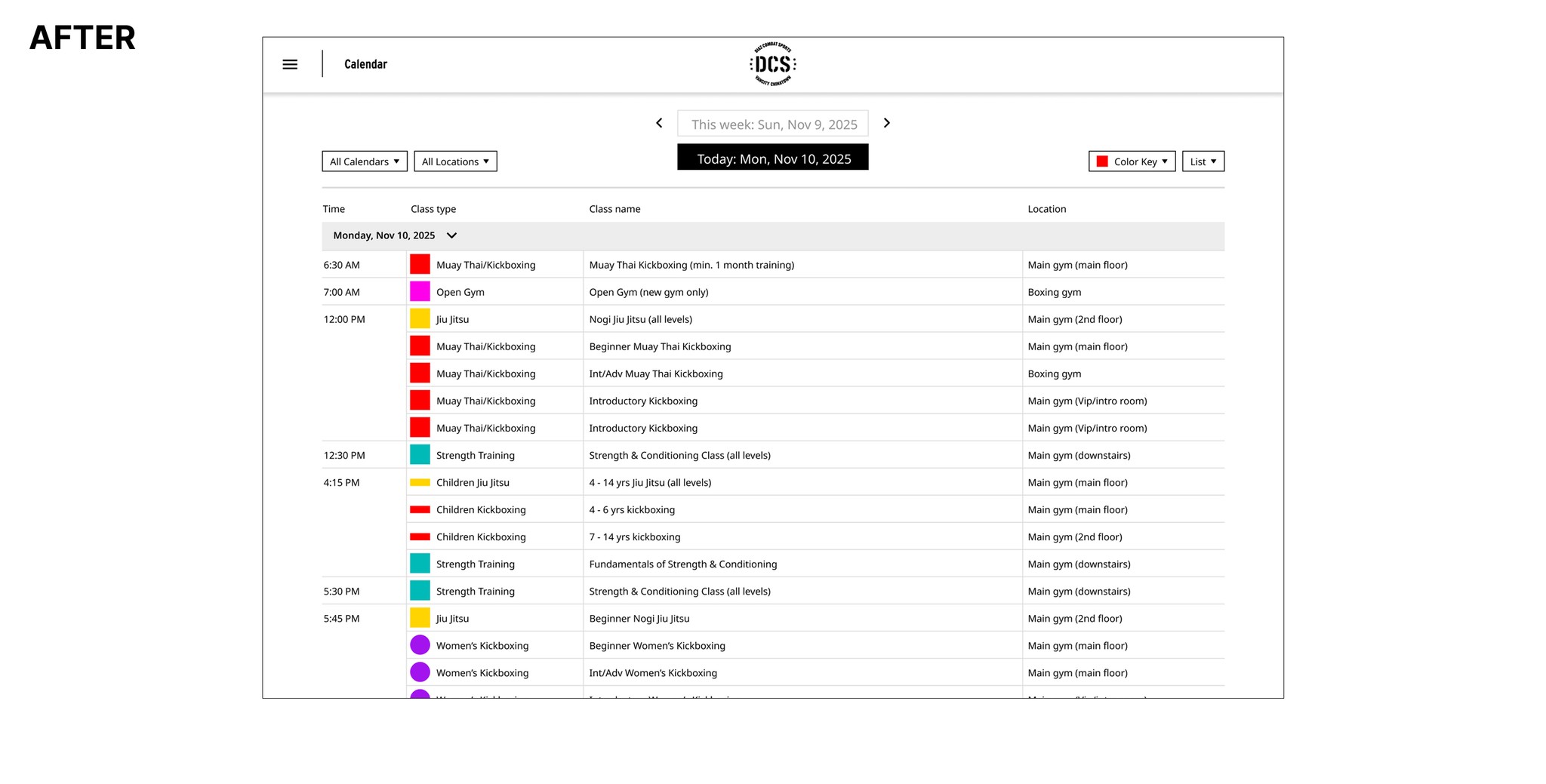
The redesign improves usability by distinguishing past dates, adding helpful view options, increasing spacing, simplifying color‑coding with shape indicators, reducing repetitive time labels, and prioritizing building names for faster scanning.
Below are the after photo of the redesign schedule.
UI ELEMENT 2
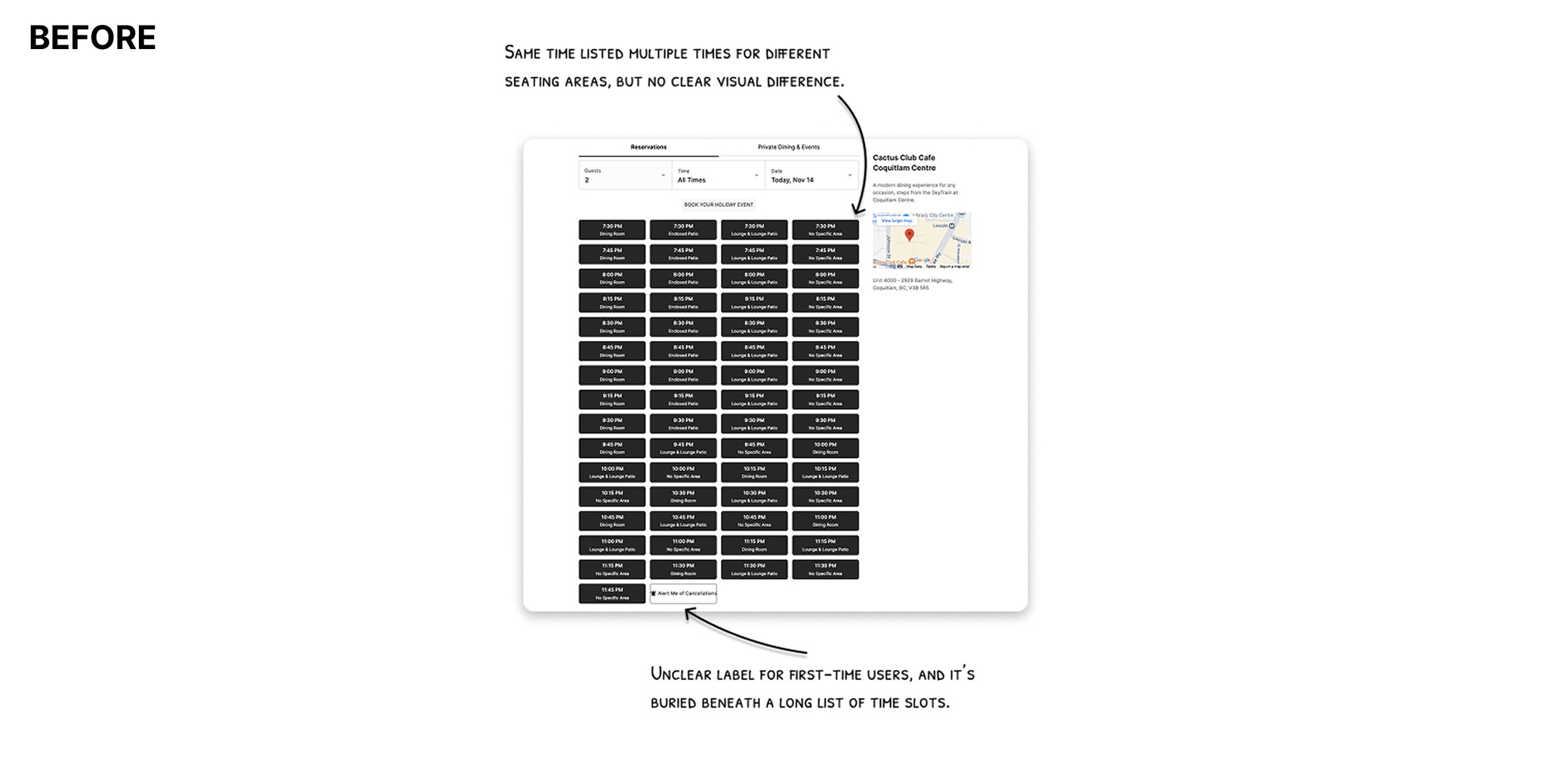
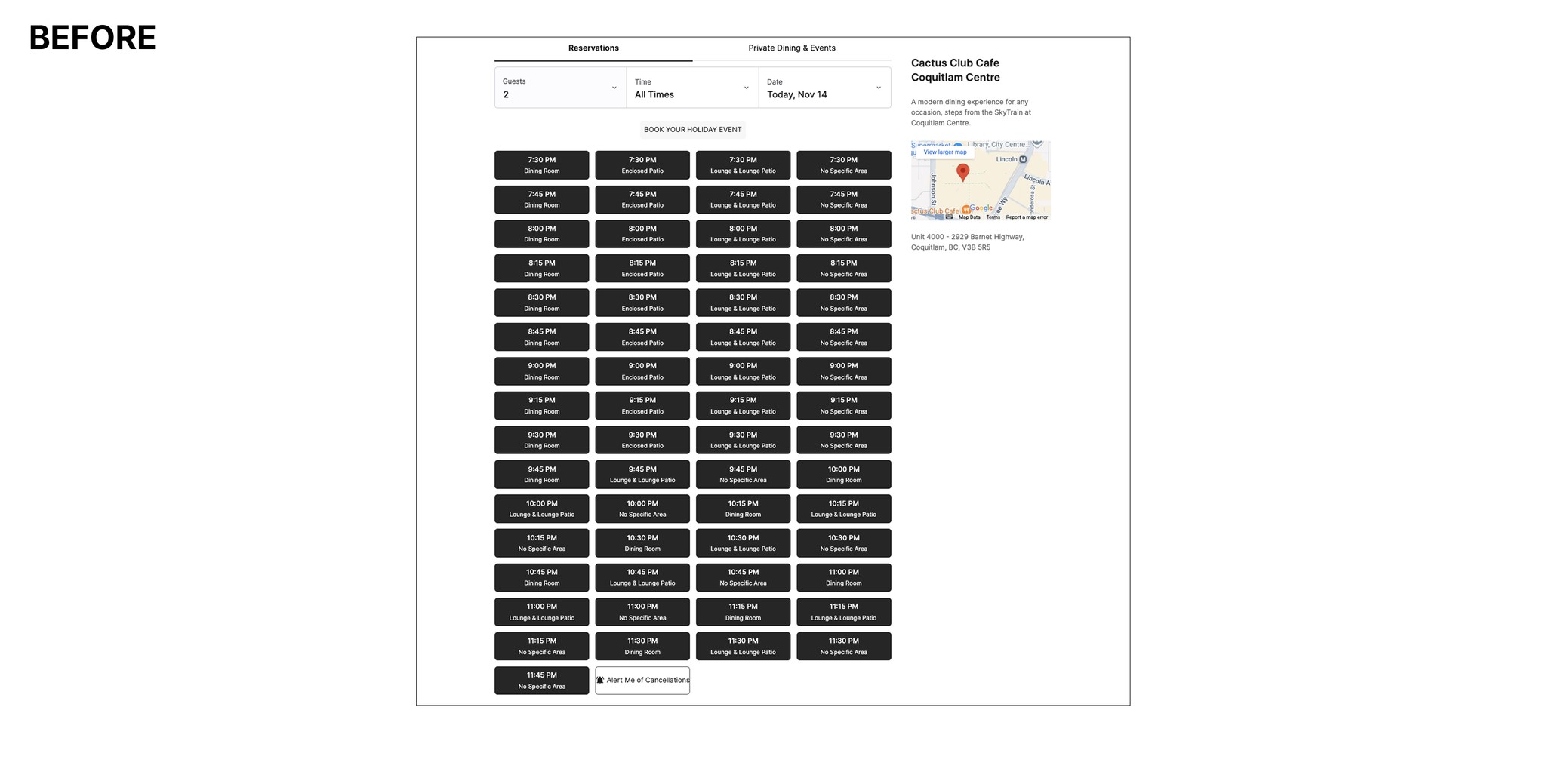
A clearer layout and smarter hierarchy make booking feel effortless.
Time slots are now grouped into single rows with seating options displayed side by side, eliminating repetitive listings and reducing visual noise. Unavailable options are dimmed for quick recognition, and the alert feature has been repositioned and renamed to improve clarity. Together, these updates help users compare options at a glance and complete their reservation with confidence.
Below are the after photo of the reservation redesign.
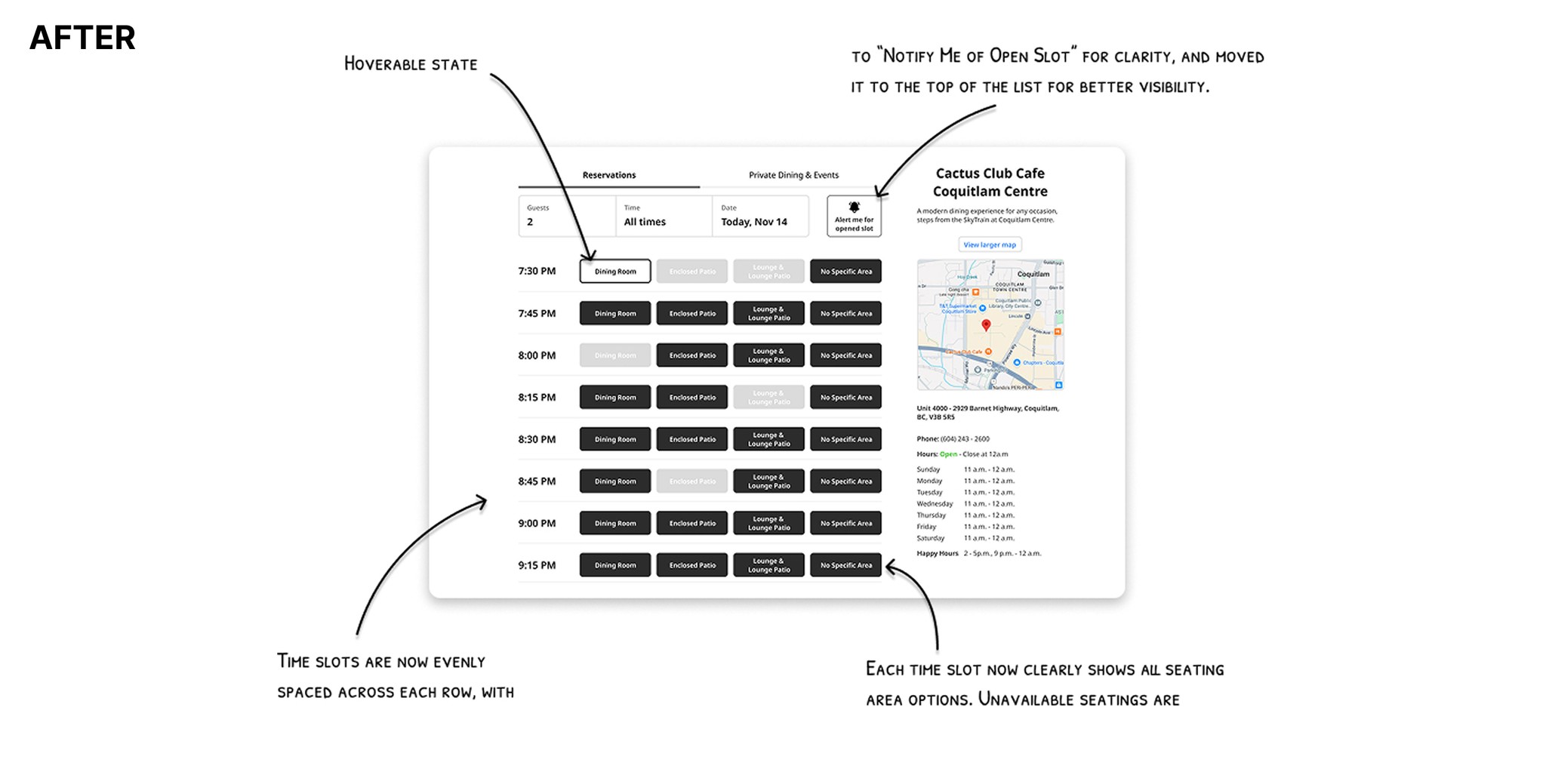
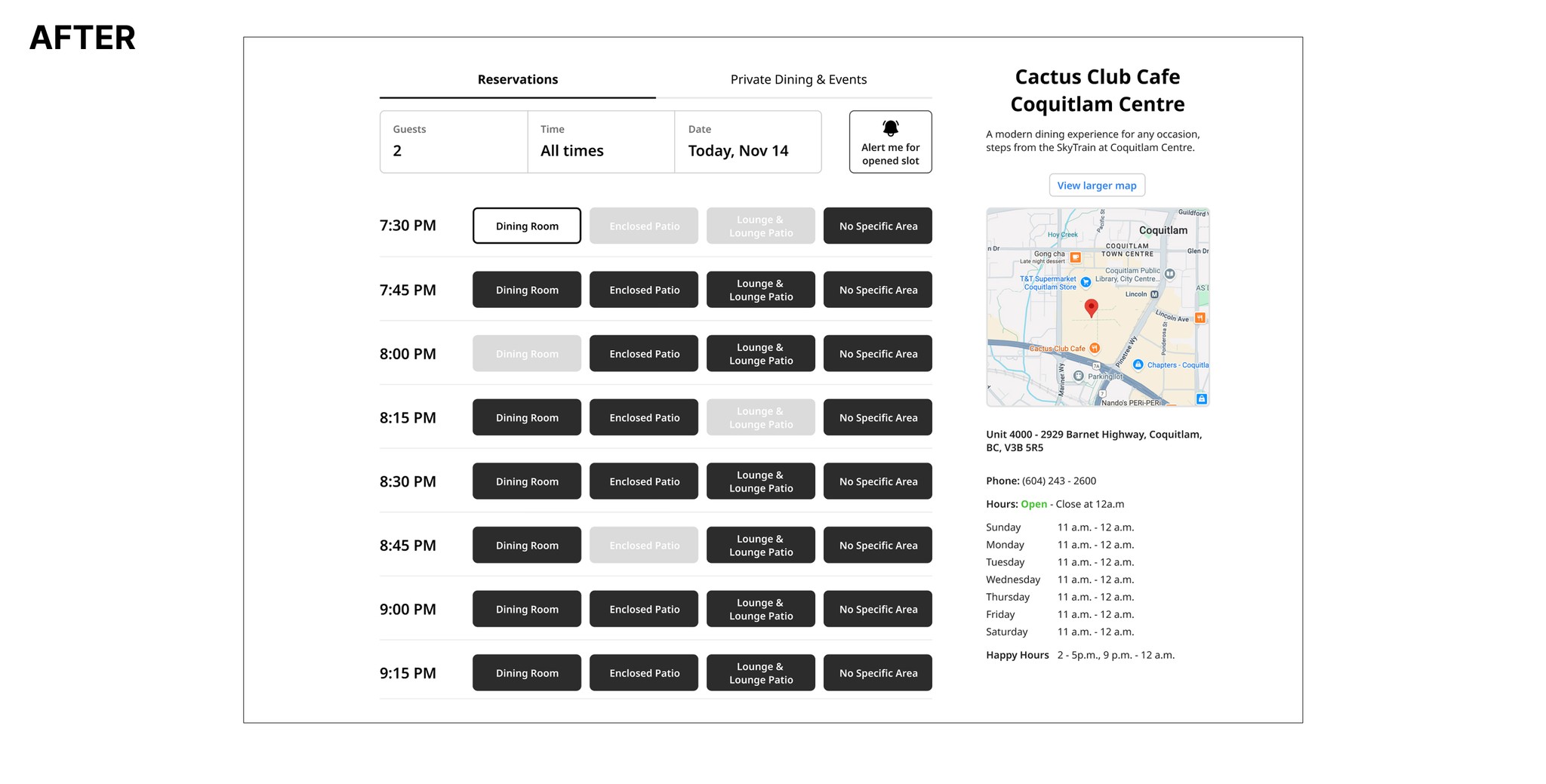
This project reminded me how much impact small UI decisions can have on real usability.
Working through these two UI critiques gave me the chance to analyze real interface issues and rethink them through clearer structure and more intuitive interactions. Even small problems, like unclear visual cues or inefficient input patterns, can quickly add friction to a user’s experience. Redesigning these elements helped me show how thoughtful adjustments can improve clarity, accessibility, and ease of use. If I had more time, I would have incorporated testing before and after the redesigns. Iterative validation is essential for understanding whether solutions truly work for users, and it often reveals insights that aren’t obvious during the design phase. This project reinforced the value of not just identifying problems, but continuously refining solutions based on real user feedback.